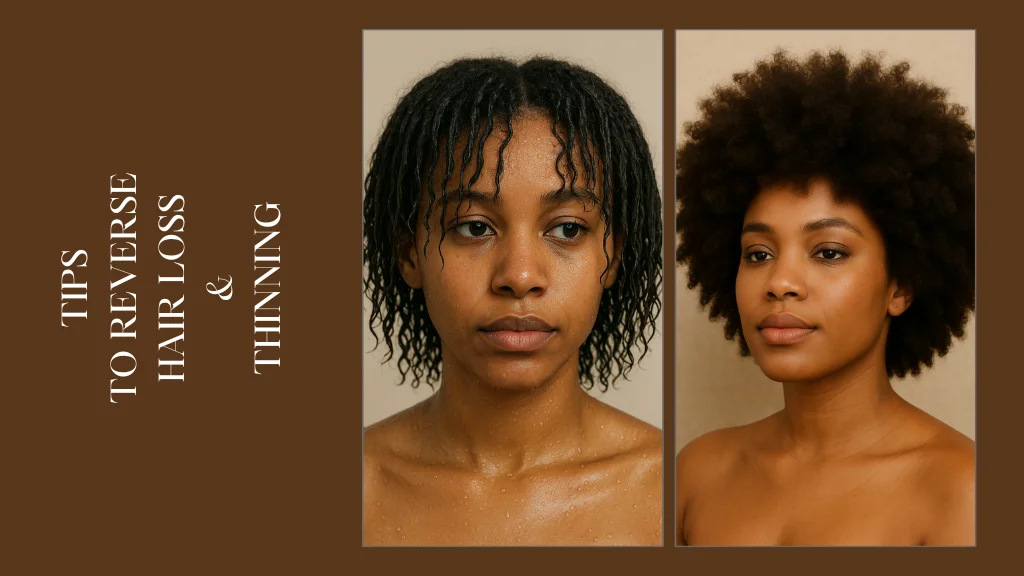
Hair Loss & Thinning? Real Tips That Help Boost Volume and Density in 2025
If you have ever looked in the mirror and felt like your ponytail is not as full as it used to be, or noticed more hair on your brush than usual, you are not alone. I have been there too. Watching your hair thin can be worrying, especially when you love taking care of it and styling it beautifully.
But here is the good news: hair thinning is common, and there are real, science-backed ways to bring back your hair’s volume and strength. Certain nutrients and topical treatments have been shown to significantly improve hair density and thickness. In this post, I will share what I have learned, not just from research, but from my own journey of rebuilding healthy hair.
Whether you have straight, wavy, or 4C hair like mine, these steps can truly make a difference.
Understanding Hair Thinning: What’s Really Happening
Before we jump into solutions, let us first understand what “hair thinning” really means.
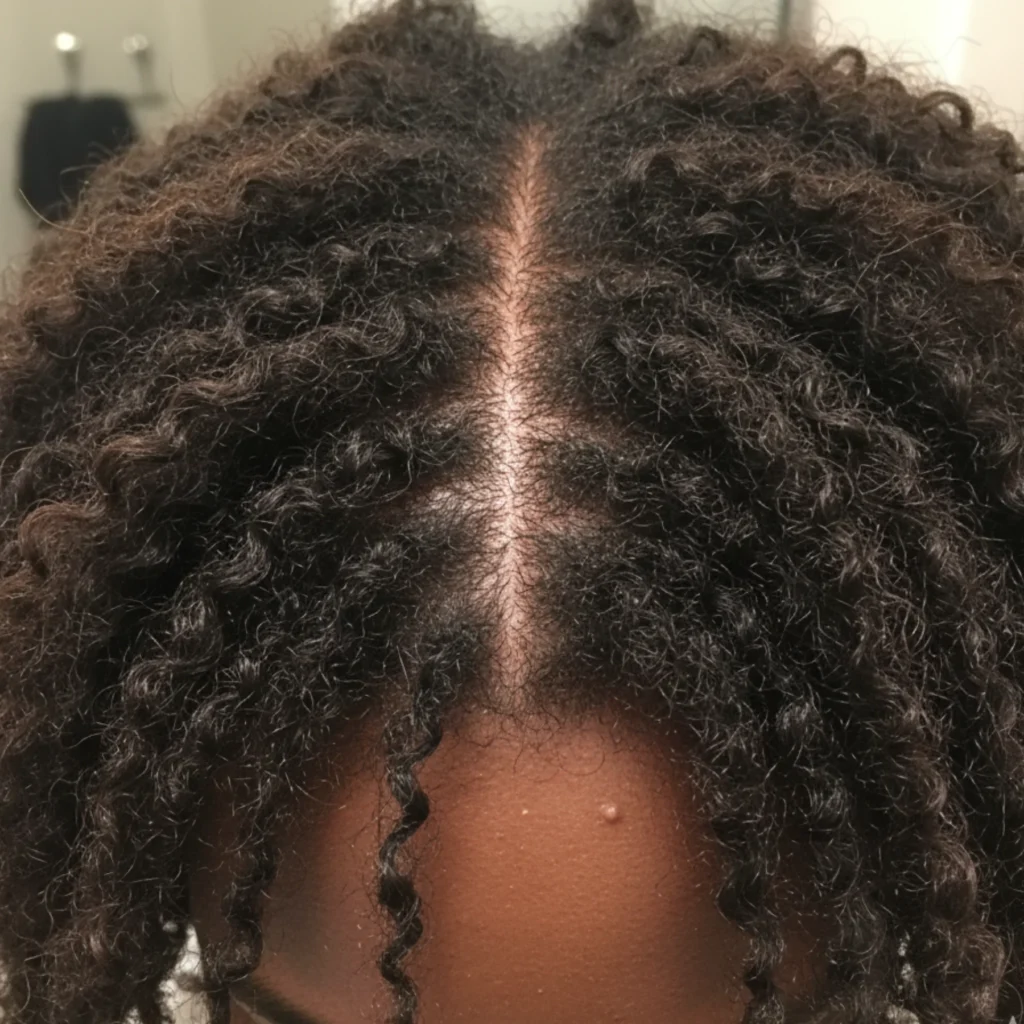
Hair thinning does not always mean you are going bald. Sometimes it means:
- Your hair strands have become finer.
- Your scalp has become more visible.
- You are shedding more hair than you’re growing.
- It could also be a sign of a health problem. Common conditions like thyroid issues or anemia can lead to hair thinning, and addressing these can improve your hair health. Knowing these potential health connections is important so that you can seek medical advice if necessary.
This can happen slowly, and many people do not notice until it’s already visible.
There are two things you need to know:
- Hair Density means how many hair strands grow per square inch on your scalp.
- Hair Volume is how much body or fullness your hair has overall.
When density drops, your scalp becomes more visible. When volume drops, your hair looks flat or lifeless. The goal is not always “more hair”, it’s about healthier, stronger hair that stays longer in the growth phase.
Why Hair Thinning Happens
Let us talk about what might be causing it. Because once you know the reason, fixing it becomes easier.
1. Stress and Hormonal Changes
I will be honest, stress affects hair more than we think. When I was under pressure, balancing content creation, deadlines, and daily life, I noticed more shedding than usual.
According to Harvard Health, high stress can trigger something called Telogen Effluvium, where hair follicles stop growing and start shedding faster. This can also happen after giving birth, illness, or big life changes.
2. Poor Nutrition
Healthy hair starts from the inside. When your body lacks nutrients like protein, iron, zinc, and vitamin D, your hair pays the price. Studies show that these nutrients play a huge role in building strong strands and supporting hair growth.
That is why eating balanced meals, like leafy greens, eggs, fish, beans, and nuts, is one of the most effective things you can do.
3. Over-Styling and Chemical Damage
I learned this the hard way. Constant heat styling, tight ponytails, or harsh relaxers slowly weaken your strands and follicles. Over time, your hair starts breaking faster than it grows.
If you are using flat irons or blow dryers often, try reducing the heat and using a heat protectant spray. Trust me, your hair will thank you.
4. Product Buildup and Scalp Neglect
Sometimes it is not the hair, it’s the scalp. When buildup clogs your follicles, hair can not grow properly. Cleansing your scalp regularly, exfoliating gently, and massaging it can help restore balance.
5. Genetics
If thinning runs in your family, your genes might play a part. While you can’t change your DNA, you can slow the process by being consistent with your hair care routine and nourishing your scalp.

How I Started Restoring My Hair Volume
Now let us get practical. Here is exactly what helped me bring my hair back to life, step by step.
1. Nourish From the Inside Out
I started by paying attention to what I ate.
I added:
- Eggs and beans for protein
- Spinach and lentils for iron
- Avocados and nuts for healthy fats
- Carrots and sweet potatoes for vitamin A
I also increased my water intake, because hydration helps your scalp and strands stay strong.
Tip: Try to eat colorful meals! Each color of fruit or vegetable has a different nutrient that supports your hair.
2. Massage Your Scalp Daily
At first, I underestimated this step. But after trying it for a few weeks, I noticed my hair felt thicker at the roots.
A gentle scalp massage improves blood flow, which brings oxygen and nutrients to your follicles. You can use your fingertips or a soft scalp brush.
You can also add natural oils like rosemary oil or peppermint oil, which studies show may stimulate growth. I usually mix a few drops with a carrier oil (like jojoba or castor oil) and massage for 5 minutes every night.
3. Switch to Gentle, Sulfate-Free Products
I used to think the more lather, the cleaner the hair. But many shampoos contain sulfates that strip natural oils and weaken the strands.
Now, I use sulfate-free shampoos that cleanse without drying out my scalp. For conditioners, I focus on products with biotin, keratin, or rice water, which help strengthen the hair shaft.
For those with 4C hair like me, moisture is everything. A deep conditioner once a week makes a huge difference.
4. Trim Regularly and Avoid Tight Styles
This may sound small, but trimming your ends every 8–10 weeks keeps your hair healthy. Split ends can travel up the strand and cause more breakage, making hair look thinner.
Also, avoid hairstyles that pull too tightly at your scalp. I learned to alternate between protective styles (like twists and braids) and leaving my hair free to breathe.
5. Protect Your Hair at Night
Friction is an invisible enemy. Cotton pillowcases absorb moisture and cause breakage. Switching to a satin bonnet or silk pillowcase helped me retain length and volume.
If you have 4C or curly hair, this is non-negotiable. You will wake up with softer, more moisturized hair.

The Role of Consistency
Hair growth takes time, sometimes months, before you see big results. Think of it like bamboo, which spends months developing strong roots before it sprouts above ground. At first, it might feel like nothing is changing, but that is when consistency matters most.
For me, I started noticing less shedding around month two, and by month four, my hairline and crown felt thicker. So, do not rush. Treat your hair like a long-term investment; gentle, patient, and consistent.
When to See a Professional
If you have tried home care for a few months and still see a lot of thinning or bald spots, it might be time to consult a dermatologist or trichologist (a hair specialist). Red flags to look out for include sudden or patchy hair loss, noticeable scalp pain, or irritation. These could be signs of underlying health issues that require professional attention.
They can check your scalp health, hormone levels, and recommend treatments such as:
- Minoxidil (FDA-approved for regrowth)
- PRP therapy (platelet-rich plasma)
- Nutrient supplements or blood tests to identify deficiencies
Getting professional help early can make a big difference, especially if the cause is medical or hormonal.
Science-Backed Ingredients to Look For
Here are a few ingredients supported by research that can help with density and strength:
- Biotin: Supports keratin production and may reduce hair thinning.
- Niacinamide (Vitamin B3): Improves scalp circulation.
- Caffeine: Studies show it may stimulate hair follicles.
- Saw Palmetto: A natural DHT blocker that helps reduce hormone-related hair loss.
- Rice Water: Contains amino acids that strengthen strands.
When shopping for new hair products, keep an eye out for these ingredients; they are trending for a reason.

My Simple Weekly Hair Care Routine
Here is how I maintain fuller hair while balancing my schedule:
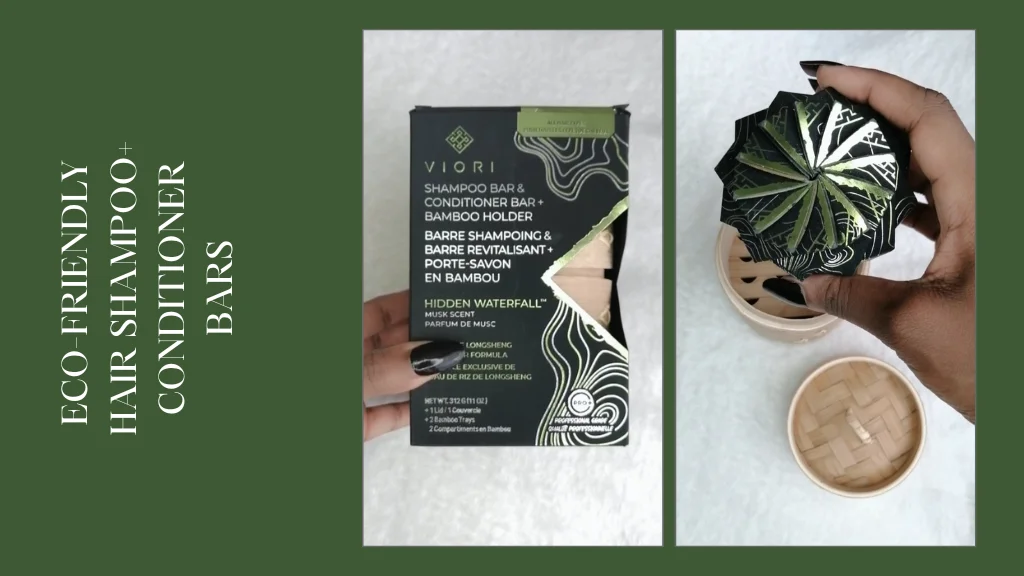
Sunday: Deep cleanse with sulfate-free shampoo bar + deep conditioner bar.
Monday–Wednesday: Moisturize and seal with light oil.
Thursday: Scalp massage with rosemary oil.
Friday–Saturday: Low manipulation styles (twists or protective bun).
This keeps my scalp clean, my hair hydrated, and my strands protected.
Final Thoughts
If your hair feels thinner than before, please don’t panic. Hair thinning is something so many women experience, especially when life gets stressful or busy. It’s crucial to remember that you’re not alone in this journey.
Connecting with support groups can offer comfort and shared experiences. Additionally, caring for your emotional health is equally important. Consider incorporating self-care practices such as meditation, journaling, or gentle exercises like yoga to help manage stress. But here is what I have learned through my own experience: with small, consistent changes, your hair can absolutely bounce back.
Start by feeding your body right, being gentle with your scalp, and using products that protect rather than strip. Every strand matters, and over time, these habits create visible results.
So, take a deep breath, be patient, and start where you are. Healthy, fuller hair isn’t about overnight fixes; it is about steady care, knowledge, and love for yourself.